
How AI Is Rewriting the Rules of Brand Transformation
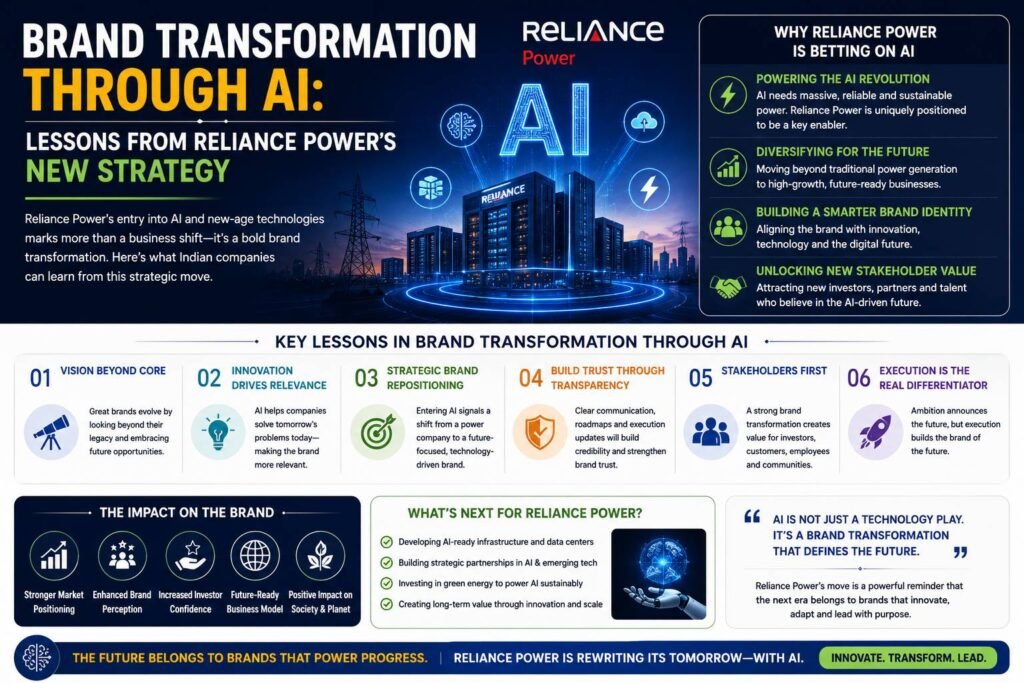
The energy sector has never been known for rapid reinvention. Yet Reliance Power’s recent strategic pivot offers a compelling case study in how artificial intelligence can serve as the backbone of a comprehensive brand transformation. As organizations across industries grapple with shifting consumer expectations, competitive disruption, and digital acceleration, the lessons emerging from Reliance Power’s new strategy deserve careful attention from business leaders and brand strategists alike.
Brand transformation through AI is no longer a futuristic concept reserved for technology companies. It is happening right now in capital-intensive, traditionally conservative industries — and the results are reshaping how we think about corporate identity, stakeholder communication, and long-term value creation.
The Strategic Context: Why Reliance Power Needed to Reinvent
Reliance Power has faced significant headwinds over the past decade — from financial restructuring challenges to reputational pressures that tested investor confidence. These circumstances created an urgent need not just for operational improvement, but for a fundamental rethinking of how the brand communicates its purpose, capabilities, and future trajectory.
The company’s leadership recognized that incremental fixes would not be sufficient. What was needed was a systematic, data-driven approach to rebuilding trust and repositioning the brand in a crowded and skeptical marketplace. This is where artificial intelligence entered the picture — not as a cosmetic tool, but as a strategic enabler capable of driving meaningful, measurable change.
AI as a Brand Intelligence Engine
One of the most significant lessons from Reliance Power’s new strategy is the use of AI as a brand intelligence engine. Traditional brand audits rely heavily on periodic surveys, focus groups, and analyst reports — all of which are slow, expensive, and subject to human bias.
AI-powered sentiment analysis and natural language processing tools allow organizations to:
- Monitor brand perception across thousands of digital touchpoints in real time
- Identify emerging narratives before they become reputational crises
- Understand how different stakeholder segments — investors, regulators, consumers, and employees — perceive the brand differently
- Benchmark brand health metrics against competitors with far greater precision
By deploying these tools, Reliance Power gained a granular, continuously updated picture of where its brand stood and, critically, where the gaps between perception and reality were most pronounced. This intelligence formed the foundation of every subsequent strategic decision.
Learn More About AI From Cresco
Personalizing Stakeholder Communication at Scale
A central pillar of brand transformation through AI involves moving away from one-size-fits-all messaging toward highly personalized communication strategies. Reliance Power’s new approach reflects a sophisticated understanding that investors, retail customers, government bodies, and media outlets each require a distinct narrative — one that speaks directly to their specific concerns and priorities.
AI-driven content platforms make this kind of segmentation not only possible but scalable. Machine learning models can analyze engagement patterns and optimize message delivery across channels, ensuring that the right content reaches the right audience at the right moment. For a company rebuilding trust after a period of difficulty, this precision is invaluable.
Lessons for Other Organizations
The personalization lesson extends well beyond the energy sector. Any organization undergoing brand transformation can apply similar principles:
- Segment your audiences with data, not assumptions. AI removes the guesswork from audience profiling.
- Test messaging continuously. Machine learning enables rapid A/B testing of communication strategies across digital channels.
- Adapt in real time. Unlike traditional campaigns locked into quarterly cycles, AI-enabled strategies can pivot based on live feedback.
Rebuilding Credibility Through Transparent Data Storytelling
Perhaps the most instructive element of Reliance Power’s new strategy is its emphasis on transparent, data-driven storytelling. In an environment where stakeholders are deeply skeptical, vague promises and polished corporate language are no longer sufficient. What rebuilds credibility is specificity — concrete data, clear milestones, and honest acknowledgment of past challenges.
AI plays a critical role here by helping organizations synthesize complex operational and financial data into accessible, compelling narratives. Automated reporting tools, AI-assisted data visualization, and predictive analytics dashboards allow companies to demonstrate progress in ways that are both transparent and persuasive.
For Reliance Power, this has meant presenting project timelines, capacity additions, and financial recovery metrics in formats that different audiences can readily interpret and trust. The brand is no longer asking stakeholders to take its word for things — it is showing them the evidence.
AI-Driven Innovation as a Brand Signal
There is another dimension to this transformation that is easy to overlook: the act of adopting AI itself sends a powerful brand signal. When a company that has historically been associated with legacy infrastructure publicly commits to AI-driven operations, it communicates ambition, adaptability, and forward-thinking leadership.
Reliance Power’s integration of AI into areas such as predictive maintenance, grid optimization, and operational efficiency is not just a technical upgrade — it is a brand statement. It tells investors that the organization is serious about long-term value creation. It tells regulators that the company is committed to operational excellence. And it tells the broader market that this is not the same organization it was five years ago.
This is one of the most underappreciated lessons from the brand transformation through AI conversation: the technology adoption journey itself becomes part of the brand story.
Key Takeaways for Business Leaders
Organizations considering their own brand transformation through AI can draw several actionable lessons from Reliance Power’s new strategy:
- Start with intelligence, not aesthetics. AI-powered brand audits should precede any rebranding efforts.
- Align internal culture with external messaging. AI can identify gaps between what a company says and what it does.
- Use data to build trust, not just efficiency. Transparent reporting powered by AI is a credibility asset.
- Treat AI adoption as a brand narrative. The innovation journey itself communicates values and direction.
- Commit to continuous transformation. AI enables iteration at a speed that traditional brand strategies cannot match.
The Broader Implication
What Reliance Power’s experience ultimately demonstrates is that brand transformation through AI is not about replacing human creativity or strategic judgment. It is about augmenting both with tools that are faster, more precise, and more responsive than anything previously available. The companies that understand this distinction — and act on it decisively — will be the ones that define brand leadership in the decade ahead.
READ MORE:
- Why AI Is Becoming a Corporate Branding Strategy for Indian Companies
- Why Reliance Power Is Entering the AI Business and What It Means for Investors
- How to Build a Personal Brand from Scratch in 30 Days
Published By Branding.net.in