
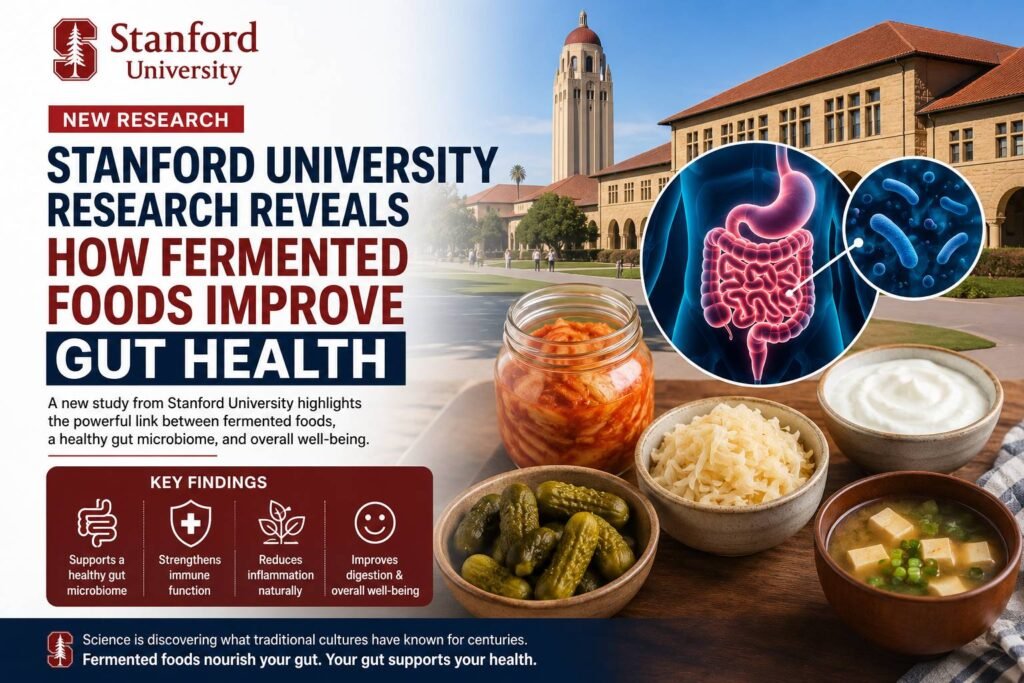

Over the past few years, gut health has moved from a niche topic in scientific journals to a mainstream conversation at kitchen tables and in wellness circles across India and the world. People are paying closer attention to what they eat, not just for weight or energy, but for the way food affects the trillions of microorganisms living inside the digestive tract.
Fermented foods, which have been a cornerstone of Indian kitchens for generations, are now at the centre of serious scientific investigation. Curd, buttermilk, idli batter, dosa, kanji, and traditional pickles are not just familiar everyday staples. They are, according to a landmark study from Stanford University, potentially important tools for improving gut microbiome diversity and reducing inflammatory signals in the body.
The Stanford University fermented foods research, published in the prestigious journal Cell in July 2021, provided some of the clearest clinical evidence to date on how adding fermented foods to the diet affects gut bacteria and immune markers. Led by researchers at the Stanford School of Medicine, including Justin Sonnenburg, Erica Sonnenburg, and Christopher Gardner, the study offered insights that resonate deeply with the food traditions that generations of Indian families have followed without needing scientific justification.
This article unpacks what the Stanford study found, explains the science behind fermentation and gut health, looks at fermented foods familiar to Indian households, and offers practical guidance on how to include more of these foods in a balanced daily diet.
Understanding Fermented Foods
What Is Fermentation?
Fermentation is a natural process in which microorganisms such as bacteria, yeast, or fungi break down sugars and other compounds in food. This process changes the taste, texture, and nutritional profile of the food, and in many cases introduces beneficial live bacteria known as probiotics.
Humans have been fermenting food for thousands of years, often without understanding the biological processes involved. In India, the practice of fermenting foods like curd, dosa batter, and kanji stretches back centuries. In Korea, kimchi has been made for over a thousand years. In Eastern Europe, sauerkraut and kefir are traditional staples. These foods were preserved and consumed long before the word microbiome existed.
Common Fermented Foods Around the World and in India
The fermented food category is broad and varies significantly across regions. Here are some of the most widely consumed fermented foods, including several that are integral to Indian cuisine:
- Curd and Dahi: Made by fermenting milk with live bacterial cultures. A daily staple in most Indian households and one of the richest dietary sources of beneficial bacteria.
- Buttermilk (Chaas): Diluted curd with added spices. Light on the digestive system and widely consumed during summer across India.
- Idli and Dosa Batter: Made from rice and lentils fermented overnight, producing a batter with naturally occurring lactic acid bacteria. One of the most nutritious traditional preparations in South Indian cuisine.
- Kanji: A fermented drink made from black carrots, particularly popular in North India during winters. Rich in naturally occurring probiotics.
- Traditional Pickles (Achar): Fermented with salt, oil, and spices rather than vinegar, these contain live cultures and have been part of Indian meals for centuries.
- Kefir: A fermented milk drink with a higher concentration of bacteria and yeast than regular yogurt. Popular in Western and Eastern Europe and gaining attention in urban India.
- Kimchi: Fermented vegetables, typically cabbage, with spices. A staple of Korean cuisine now available in several Indian cities and widely recognised for its probiotic content.
- Sauerkraut: Fermented cabbage with salt, producing lactic acid bacteria. A traditional food in German cuisine.
- Kombucha: A fermented tea drink made using a culture of bacteria and yeast known as a SCOBY. Increasingly popular among urban Indian health enthusiasts.
- Yogurt: Widely consumed globally and particularly versatile, yogurt forms the base of many Indian drinks and preparations.
Overview of the Stanford University Fermented Foods Research
Background and Motivation
The Stanford study, titled “Gut-microbiota-targeted diets modulate human immune status,” was published in the journal Cell on 12 July 2021. The research was conducted at the Stanford School of Medicine and involved researchers from the departments of Microbiology and Immunology, Bioengineering, and the Stanford Prevention Research Centre.
The motivation behind the study was clear and relevant. Chronic inflammatory conditions have become increasingly common in industrialised societies, and researchers wanted to investigate whether dietary changes could influence the gut microbiome in ways that might address this trend. Prior research had established that the gut microbiome shapes immune function and overall health, and that low microbial diversity has been associated with conditions including obesity and type 2 diabetes.
As Professor Christopher Gardner of Stanford explained, the goal was to test whether microbiota-targeted food could serve as a practical strategy for addressing the rising incidence of chronic inflammatory diseases. The team focused specifically on high-fibre foods and fermented foods because both categories had shown promise in earlier, smaller-scale research.
Study Design and Participants
The trial involved 36 healthy adult volunteers who were randomly assigned to one of two diet groups for a period of ten weeks. One group followed a diet rich in fermented foods, while the other followed a high-fibre diet. The fermented food group consumed foods including yogurt, kefir, fermented cottage cheese, kimchi and other fermented vegetables, vegetable brine drinks, and kombucha tea.
This was a randomised clinical trial, which is considered one of the most reliable research designs in nutrition science. Participants’ gut microbiomes were analysed before, during, and after the intervention using advanced genomic and proteomic techniques, allowing the researchers to track changes in microbial populations and immune markers with considerable precision.
The study used what researchers describe as a multiomics approach, measuring not just which bacteria were present but also proteins, metabolites, and immune cell profiles, providing a comprehensive picture of how diet affected the body at multiple levels simultaneously.
Key Findings from Stanford University Fermented Foods Research
Increased Microbiome Diversity
The most striking finding from the Stanford University fermented foods research was a consistent increase in gut microbiome diversity among participants who ate a fermented food-rich diet for ten weeks. This effect was seen across all participants in the fermented food group, and the increase was proportional to the amount of fermented food consumed. Higher intake was associated with greater microbiome diversity.
What surprised the researchers was that many of the new microbial species that appeared in participants’ guts during the fermented food diet were not the same bacteria present in the fermented foods themselves. As Justin Sonnenburg observed, the fermented foods appeared to do something that allowed for the rapid growth or recruitment of other microbial species into the gut environment. This suggests the effect goes beyond simply consuming bacteria through food and may involve broader ecological changes within the gut ecosystem.
Microbiome diversity is considered by many researchers to be an indicator of gut health. A wider variety of microbial species is generally associated with more resilient digestive function and a more responsive immune system.
Reduction in Inflammatory Markers
The second major finding was a measurable reduction in 19 different inflammatory proteins among participants on the fermented food diet. These proteins, known as cytokines, are markers of immune system activity and inflammation in the body. Elevated levels of certain cytokines have been associated in research with conditions including type 2 diabetes, cardiovascular disease, and various autoimmune conditions.
Significantly, none of these 19 inflammatory proteins decreased in participants assigned to the high-fibre diet during the same ten-week period. This distinction was notable because high-fibre diets have long been associated with health benefits. The fact that fermented foods produced a more pronounced anti-inflammatory effect, at least in terms of these specific immune markers over this timeframe, was an unexpected and important finding.
Sonnenburg described the finding as “stunning,” noting that it represents one of the first clear examples of how a straightforward dietary change can consistently remodel the gut microbiota across a group of healthy adults.
Improved Gut Health Indicators
Beyond the specific inflammatory proteins and microbiome diversity metrics, the Stanford study found that participants in the fermented food group showed broader changes in immune cell profiles. The researchers measured 19 immune cell types alongside the cytokines, and four of these showed changes consistent with a less activated immune state.
This immune modulation is significant because a chronically over-activated immune system is at the root of many inflammatory conditions. The researchers noted that the findings suggest fermented foods may be valuable in countering the decreased microbiome diversity and increased inflammation that have become increasingly common in industrialised societies.
Positive Effects on Overall Wellness Indicators
While the study was a proof-of-concept clinical trial with a relatively small sample size, its findings were consistent across participants. The multiomics approach used by the Stanford team provided a level of detail that goes beyond what most earlier fermented food studies had captured. The researchers were able to map specific dietary inputs to specific biological responses, providing a framework for understanding how fermented foods influence health at a mechanistic level.
| Finding | Fermented Food Group | High-Fibre Food Group |
|---|---|---|
| Gut Microbiome Diversity | Increased consistently across all participants | No significant consistent increase observed |
| Inflammatory Proteins (Cytokines) | 19 inflammatory proteins decreased | No decrease in these proteins observed |
| Immune Cell Profile Changes | 4 immune cell types showed changes consistent with lower immune activation | Different pattern of immune changes observed |
| Effect Consistency | Consistent across all fermented food participants | Variable results observed |
| Dose Relationship | Higher intake associated with greater diversity increase | Not directly comparable |
What Is the Gut Microbiome?
The gut microbiome is the community of trillions of microorganisms, including bacteria, viruses, fungi, and other microscopic life forms, that live in the human digestive tract. Each person’s microbiome is unique and is shaped by genetics, early life environment, diet, lifestyle, medication history, and the geographic region where they live.
The gut microbiome plays a role in digestion, the synthesis of certain vitamins, the regulation of the immune system, and the production of neurotransmitters that influence mood and cognition. Research over the past two decades has established that the gut is not merely a site of digestion but an active participant in many aspects of health and disease.
Microbial diversity, meaning the number and variety of different species present in the gut, is considered a marker of a healthy microbiome. People living in non-industrialised settings, who consume a wider variety of foods and are exposed to more diverse environments, tend to have higher gut microbial diversity than those in urban, industrialised settings. The loss of microbial diversity in industrialised populations is thought to be one driver of the rising rates of conditions such as inflammatory bowel disease, allergies, and autoimmune disorders.
Diet is one of the most powerful tools available for influencing the gut microbiome, which is partly why the Stanford University fermented foods research attracted so much attention from both scientists and the general public.
Fermented Foods and Gut Health
How Beneficial Bacteria Develop During Fermentation
During fermentation, naturally occurring or added microorganisms consume sugars and produce compounds including lactic acid, acetic acid, and carbon dioxide. This process not only preserves the food but changes its microbial composition. The live bacteria present in fermented foods, particularly those made through lacto-fermentation such as curd, kimchi, and traditional pickles, can potentially survive the journey through the digestive tract and take up residence in the gut, at least temporarily.
Digestive Health and Nutrient Absorption
Fermentation partially breaks down some of the harder-to-digest compounds in food, including certain proteins and carbohydrates. This can make nutrients more bioavailable, meaning the body is better able to absorb them. Fermented dairy products, for example, are generally better tolerated by people with lactose sensitivity than unfermented milk, because the fermentation process reduces the lactose content.
The lactic acid produced during fermentation also creates an acidic environment in the food that can inhibit the growth of harmful bacteria, which may be one reason why fermented foods have historically been used as a method of food preservation in India and elsewhere.
Immune System Support
Given that approximately 70 percent of the body’s immune cells are located in and around the gut, the relationship between the gut microbiome and immunity is direct and significant. The Stanford research reinforced the idea that a diverse microbiome, supported by a fermented food-rich diet, may be associated with more balanced immune function and lower levels of certain inflammatory markers. This does not mean fermented foods are a treatment for any disease, but it does suggest they may play a supporting role in maintaining immune health as part of a balanced diet.
Fermented Foods Commonly Consumed in India
India has one of the richest traditions of fermented food preparation in the world. Many of these foods have been consumed for generations without the benefit of scientific explanation, yet the Stanford University fermented foods research provides a compelling scientific framework for understanding why they may have been so central to Indian culinary traditions.
| Food Name | Fermentation Method | Common Region | Potential Nutritional Benefits |
|---|---|---|---|
| Curd and Dahi | Milk fermented with bacterial starter culture | Pan-India | Rich in calcium, protein, and live bacterial cultures |
| Buttermilk (Chaas) | Diluted curd, sometimes spiced | Pan-India (especially West and South) | Light on digestion, cooling in summer, contains live cultures |
| Idli Batter | Rice and urad dal fermented overnight using natural lactic acid bacteria | South India | Naturally leavened, easier to digest than unfermented versions |
| Dosa Batter | Rice and dal fermented with natural bacteria | South India | Improved protein availability, lower glycaemic impact than plain rice |
| Kanji | Black carrots or beets fermented with mustard seeds in water | North India, especially Punjab, Uttar Pradesh | Contains naturally occurring probiotics, traditionally used as a digestive tonic |
| Traditional Pickles (Achar) | Salt and oil-based lacto-fermentation (not vinegar) | Pan-India with regional variations | May contain live cultures in traditional preparations; good source of beneficial acids |
| Dhokla | Chickpea batter fermented overnight | Gujarat, Maharashtra | High in protein, light on digestion, contains lactic acid from fermentation |
| Toddy | Palm sap fermented naturally | Kerala, Goa, coastal Karnataka | Traditional use; consumed fresh before further fermentation occurs |
Fermented Foods vs Probiotics
A common area of confusion in nutrition discussions is the relationship between fermented foods and probiotic supplements. The two are related but not identical, and understanding the difference helps in making informed dietary choices.
Probiotics are defined as live microorganisms that, when administered in adequate amounts, may confer a health benefit on the host. They are available as supplements in capsule, powder, or liquid form and typically contain one or more specific bacterial strains at a defined concentration.
Fermented foods, on the other hand, are whole foods that naturally contain live microorganisms as a result of the fermentation process. They also contain proteins, fats, carbohydrates, vitamins, minerals, organic acids, and other bioactive compounds that work together in ways that isolated probiotic supplements may not replicate.
The Stanford study used whole fermented foods rather than probiotic supplements, and the results reflected the complexity of the fermented food matrix. Some researchers believe that the full food context, including the organic acids, vitamins, and other components produced during fermentation, may contribute to the biological effects observed, rather than the bacteria alone.
This does not mean probiotic supplements have no role. For specific clinical applications, targeted probiotic strains are studied and sometimes recommended. But for general dietary purposes, consuming a variety of naturally fermented whole foods may offer a broader range of compounds than a single-strain supplement can provide.
Best Fermented Foods to Include in a Balanced Diet
| Food | Type | Origin | Availability in India | Notes |
|---|---|---|---|---|
| Curd or Dahi | Fermented dairy | Global, traditional in India | Widely available | Choose fresh, homemade, or minimally processed varieties |
| Buttermilk (Chaas) | Fermented dairy | India | Very widely available | Homemade versions preferred over packaged |
| Idli and Dosa | Fermented grain and legume | South India | Pan-India | Made from naturally fermented batter; excellent everyday option |
| Kimchi | Fermented vegetables | Korea | Available in urban areas and online | Look for unpasteurised versions to ensure live cultures |
| Kefir | Fermented milk drink | Eastern Europe and Caucasus | Growing availability in Indian cities | Higher bacterial diversity than regular yogurt |
| Sauerkraut | Fermented vegetables | Germany and Eastern Europe | Available in specialty stores and online | Refrigerated, unpasteurised versions retain live cultures |
| Kombucha | Fermented tea | Origin debated; popular globally | Available in urban India and online | Moderate consumption advised due to acidity and sugar content |
| Kanji | Fermented vegetable drink | North India | Seasonal in North India | Easy to prepare at home; good probiotic option in winter |
Are Fermented Foods Suitable for Everyone?
Fermented foods are generally safe and beneficial for most healthy adults when consumed as part of a balanced diet. However, individual responses to these foods can vary, and a few considerations are worth keeping in mind.
People who are immunocompromised, including those undergoing chemotherapy or taking immunosuppressive medications, should speak with their doctor before significantly increasing their intake of fermented foods, as the live cultures may present different considerations for this group.
Some people experience bloating, gas, or digestive discomfort when they introduce fermented foods in large quantities suddenly. This is usually temporary and can be avoided by starting with small portions and gradually increasing intake over several weeks.
Individuals with histamine intolerance may find that certain fermented foods, particularly long-fermented cheeses, wine, and some pickles, trigger symptoms such as headaches or skin reactions. This is related to histamine produced during fermentation rather than to the bacteria themselves.
People with food sensitivities to dairy should note that most fermented dairy products including curd and kefir contain some lactose, though usually less than unfermented milk. Completely lactose-free fermented options include kimchi, sauerkraut, kombucha, and kanji.
As always, significant dietary changes should be discussed with a qualified healthcare professional, particularly for individuals managing existing health conditions.
Practical Tips for Adding Fermented Foods to Your Diet
For most people, incorporating more fermented foods does not require a dramatic overhaul of eating habits. Here are some practical, manageable steps:
- Start with what is familiar. If you are already eating curd or buttermilk, you are already consuming fermented foods. Simply ensuring you include a small portion at most meals is a good starting point.
- Add one new fermented food at a time. Introducing kimchi, kefir, or kombucha one at a time allows you to notice how your body responds before adding another.
- Choose naturally fermented, minimally processed versions. Commercial yogurt products with added sugar or artificial flavours, and pickles made with vinegar rather than salt-based lacto-fermentation, may not offer the same benefits as traditional preparations. Read ingredient labels carefully.
- Start with small portions. A tablespoon of kimchi, a small cup of curd, or a glass of buttermilk is a sensible starting point. There is no need for large quantities to begin experiencing the food.
- Make it a regular habit rather than an occasional event. The Stanford study found that consistent consumption over ten weeks produced measurable changes. One serving occasionally will not replicate the effects of a sustained dietary pattern.
- Consider home preparation. Making curd at home, fermenting dosa batter overnight, or preparing kanji in winter ensures you are consuming live cultures in their most natural form, without preservatives that can inhibit bacterial activity.
Limitations of the Stanford Research and Current Evidence
The Stanford University fermented foods research was an important and well-designed study, but science is always a process of building evidence over time, and the study’s authors themselves were clear about its limitations.
The trial involved 36 participants, which is sufficient for a proof-of-concept study but is a relatively small sample for drawing broad population-level conclusions. Larger and longer trials are needed to confirm whether the effects persist over longer periods and whether they generalise across more diverse populations.
The study was conducted with a specific selection of fermented foods, and the results may not apply uniformly to all fermented foods. Different fermented products contain different species and concentrations of microorganisms, and their effects may vary accordingly.
Individual responses to dietary changes are known to vary considerably. Factors including existing microbiome composition, genetics, medication use, and lifestyle habits all influence how the gut responds to dietary interventions. What works consistently at a group level may produce different results for specific individuals.
Additionally, observational research on traditional fermented food-consuming populations and clinical trial evidence is growing but still limited compared to the extensive evidence base for areas such as cardiovascular disease and nutrition. Researchers continue to publish new findings, and the science of fermented foods and the gut microbiome will almost certainly look different in five years than it does today.
Why Stanford University’s Findings Matter for Indian Readers
For Indian readers, the Stanford University fermented foods research has a particular resonance. Traditional Indian cuisine has always included fermented preparations, from the morning cup of chaas to the fermented idli batter and the jar of homemade pickle on the dining table. These are not recent health trends. They are deep-rooted food practices that evolved over centuries in ways that scientific research is only now beginning to explain.
The findings give a scientific language to what has been a lived nutritional reality for millions of Indian families. They also offer a reminder that the shift towards processed, industrialised food patterns may be displacing traditional fermented foods in ways that could have consequences for gut health and immune function that are only beginning to be understood.
The growing interest in kombucha and kimchi in Indian urban centres is one marker of changing food awareness. At the same time, it is worth remembering that affordable, locally available, and traditionally prepared fermented foods such as curd, buttermilk, kanji, and naturally fermented pickles offer similar biological benefits and are deeply embedded in Indian food culture.
Frequently Asked Questions
1. What did the Stanford University fermented foods research find?
The Stanford study, published in the journal Cell in July 2021, found that a diet rich in fermented foods over ten weeks increased gut microbiome diversity and reduced 19 inflammatory proteins in participants. These effects were consistent across all participants assigned to the fermented food group, and stronger effects were observed with higher intake.
2. Who conducted the Stanford fermented foods study?
The study was conducted by researchers at the Stanford School of Medicine, led by Justin Sonnenburg, Erica Sonnenburg, and Christopher Gardner as senior authors. The lead authors were Hannah Wastyk and Gabriela Fragiadakis. The study involved the departments of Microbiology and Immunology, Bioengineering, and the Stanford Prevention Research Centre.
3. What is the gut microbiome and why does diversity matter?
The gut microbiome is the community of trillions of microorganisms living in the human digestive tract. Microbial diversity refers to the variety of different species present. Higher diversity is generally associated with more resilient digestive function and immune health. Low microbiome diversity has been linked in research to obesity, diabetes, and inflammatory conditions.
4. Are Indian fermented foods like curd and buttermilk comparable to kimchi and kefir?
Yes, traditional Indian fermented foods including curd, buttermilk, naturally fermented pickles, kanji, and fermented batters like idli and dosa contain naturally occurring beneficial bacteria produced through lacto-fermentation. They are comparable in category to other global fermented foods, and their long presence in Indian culinary tradition reflects their value as part of a balanced diet.
5. How many servings of fermented foods should I eat daily?
The Stanford study did not specify a precise daily target, but the findings showed a dose-response relationship where greater consumption was associated with greater benefits. Including at least one serving of a fermented food at most meals, such as a cup of curd with lunch or a glass of buttermilk, is a practical starting point. Consult a nutritionist or dietitian for personalised guidance.
6. Are fermented food supplements the same as eating fermented foods?
Not exactly. Probiotic supplements contain specific bacterial strains in defined quantities, while fermented foods contain a complex mixture of live bacteria, organic acids, vitamins, and other bioactive compounds. The Stanford study used whole fermented foods, not supplements, and the effects observed may reflect the full complexity of the food rather than isolated bacteria alone.
7. Can fermented foods cause any side effects?
For most healthy adults, fermented foods are well tolerated. Some people experience temporary bloating or digestive discomfort when first introducing them in larger quantities. People with histamine intolerance, immunocompromised individuals, and those with specific food sensitivities should seek advice from a healthcare professional before significantly changing their fermented food intake.
8. Does pasteurisation affect the benefits of fermented foods?
Yes, pasteurisation kills live bacteria. Commercially pasteurised yogurt, pickles made with vinegar, or kombucha that has been heat-treated may not contain the same live cultures as unpasteurised or traditionally fermented versions. When choosing fermented foods for their probiotic content, look for refrigerated products labelled as containing live cultures, or prepare them at home using traditional methods.
9. Is the high-fibre diet also beneficial for gut health?
Yes, high-fibre diets are associated with numerous health benefits and support gut health through a different mechanism, providing food for beneficial gut bacteria known as prebiotics. The Stanford study found that the high-fibre and fermented food diets produced different effects on the microbiome and immune system, with fermented foods producing greater microbiome diversity and a larger reduction in inflammatory proteins over the ten-week study period. Both dietary approaches have value.
10. Should I consult a doctor before changing my diet to include more fermented foods?
For most healthy adults, adding traditional fermented foods such as curd, buttermilk, and idli to a balanced diet does not require medical consultation. However, if you are managing a chronic condition, taking immunosuppressive medication, are pregnant, or have a history of digestive disorders, speaking with a qualified healthcare professional before making significant dietary changes is always a sensible step.
References
- Stanford Medicine: https://med.stanford.edu/
- National Institutes of Health (NIH): https://www.nih.gov/
The information in this article is for general educational purposes only and is not a substitute for professional medical or nutritional advice. Readers are strongly advised to consult a qualified healthcare professional or registered dietitian before making significant dietary changes, especially those managing existing health conditions.
Final Thoughts
The Stanford University fermented foods research provides some of the most compelling clinical evidence to date that what we eat directly shapes the microbial communities in our gut, and that those communities in turn influence inflammation and immune function. The findings are not a prescription for any specific health outcome, but they do offer a strong scientific foundation for the idea that including a variety of fermented foods in a balanced diet is worth taking seriously.
For most Indian readers, this research is also something of a validation. Curd, buttermilk, idli, dosa, kanji, and traditional pickles are not just culturally significant. They are nutritionally meaningful in ways that science is continuing to document and explain.
The practical takeaway is straightforward. You do not need expensive or exotic products. You do not need supplements. A cup of homemade curd, a glass of buttermilk, a bowl of idli made from naturally fermented batter, or a small serving of naturally prepared pickle at most meals is a reasonable, affordable, and evidence-supported way to support gut health as part of an overall balanced diet.
Consistency matters more than quantity. A small amount of fermented food consumed regularly over weeks and months is more likely to support a diverse microbiome than an occasional large serving. In this respect, the wisdom of traditional Indian food culture and the findings of contemporary nutrition science point in the same direction.
READ MORE:
- Baba Mastnath University Admission 2026: Complete Guide
- JSS Science and Technology University Admission 2026: Complete Guide
- Birla Global University Admission 2026: Complete Guide
Published by Branding.net.in