

Why Your Behance Portfolio Matters More Than Ever
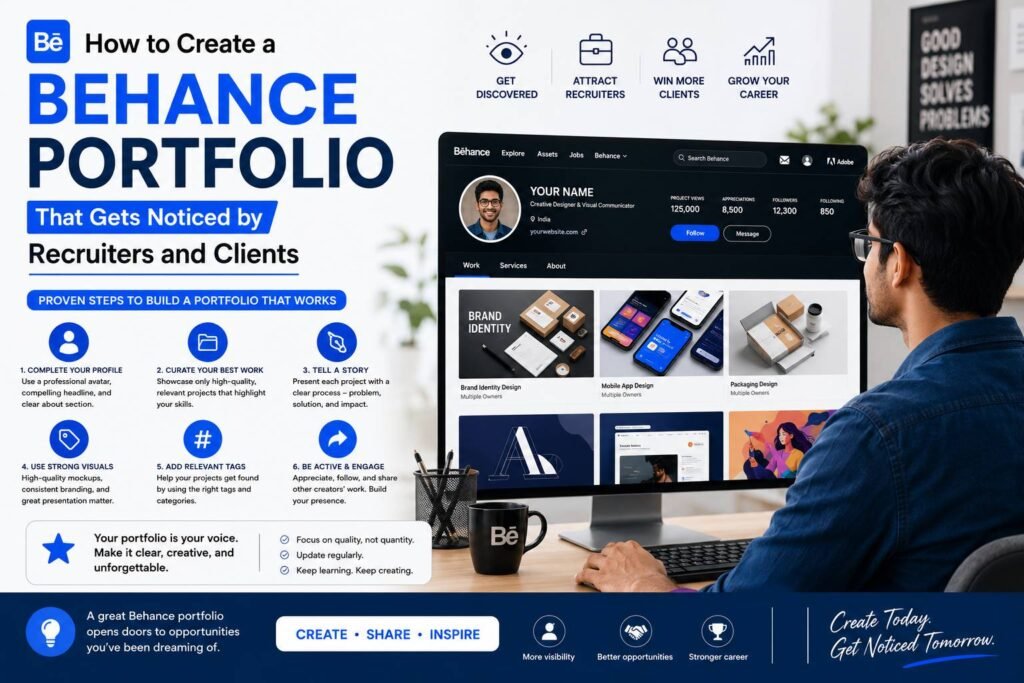
In a crowded creative marketplace, having talent is only half the battle. The other half is making sure the right people can find you, understand your work, and feel compelled to reach out. Behance remains one of the most powerful platforms for designers, illustrators, photographers, and other visual creatives to showcase their portfolios — but simply uploading work isn’t enough. If you want to know how to create a Behance portfolio that gets noticed by recruiters and clients, the answer lies in strategy, presentation, and consistency.
Start With a Strong Profile Foundation
Before you upload a single project, your profile itself needs to communicate who you are and what you do. Recruiters and clients spend seconds — not minutes — scanning profiles before deciding whether to dig deeper.
- Use a professional headshot. A clear, well-lit photo builds trust and makes your profile feel human.
- Write a focused bio. In two to three sentences, describe your specialty, your approach, and who you work with. Avoid vague language like “passionate creative.” Instead, say something like “Brand identity designer helping startups build visual systems that scale.”
- Fill in your location and availability. Many recruiters filter by location or remote availability. Don’t leave these fields blank.
- Link to your website and social profiles. Behance should be one node in a connected professional network, not an island.
Your profile is your first impression. Make it count before a recruiter even clicks on a project.
Curate Ruthlessly — Quality Over Quantity
One of the most common mistakes creatives make is uploading everything they’ve ever made. A bloated portfolio dilutes your strongest work and confuses visitors about your focus area.
Instead, select six to twelve projects that represent the type of work you want to be hired for. This is a critical point: your portfolio should reflect your desired future work, not just your past. If you want to design mobile apps, lead with mobile app projects. If you want brand identity clients, showcase brand identity work prominently.
Ask yourself these questions before including a project:
- Does this piece demonstrate a skill I want to use professionally?
- Is the execution strong enough to stand next to my best work?
- Would I be proud to walk a client through this in a meeting?
If the answer to any of these is no, leave it out or save it for a personal archive.
Present Projects as Case Studies, Not Just Images
This is where most Behance portfolios fall flat — and where yours can genuinely stand out. Recruiters and clients don’t just want to see pretty pictures. They want to understand your thinking, your process, and the results your work achieved.
Structure each project as a mini case study:
The Problem
Open with a brief explanation of the challenge. What was the client trying to solve? What constraints existed? Even a sentence or two sets meaningful context.
The Process
Show your thinking. Include sketches, wireframes, mood boards, or early iterations. This demonstrates that your final output is the result of deliberate decision-making, not just aesthetic instinct.
The Solution
Present the final work clearly and beautifully. Use high-quality mockups, consistent spacing, and a logical visual flow. Behance rewards projects that look polished in the feed thumbnail as well as in the full view.
The Outcome
Whenever possible, include results. Did conversions increase? Did the rebrand improve brand recognition? Quantifiable outcomes are gold for recruiters evaluating creative professionals.
This case study format is exactly how to create a Behance portfolio that gets noticed by recruiters and clients — it shows that you think like a professional, not just a maker.
Optimise for Behance’s Discovery Algorithm
Behance operates much like a search engine within the creative community. The platform surfaces projects based on tags, categories, and engagement signals. Understanding this helps you get found organically.
- Choose the correct project category. Be specific — “Brand Identity” will reach a more targeted audience than “Graphic Design.”
- Use relevant tags thoughtfully. Include tools you used (Adobe Illustrator, Figma), the industry (fintech, hospitality), and the deliverable type (logo design, UI design). Aim for eight to twelve well-chosen tags.
- Write a project description. Many creatives skip this entirely. A short paragraph describing the project, the client type, and the tools used improves searchability significantly.
- Publish consistently. The Behance algorithm favours active accounts. Even updating an existing project can signal activity and refresh its visibility.
Engage With the Community Strategically
Behance is a social platform, and engagement matters for visibility. Appreciating and commenting on other creatives’ work isn’t just good manners — it increases your own profile’s activity signals and can attract reciprocal attention.
Follow designers whose work you admire. Join relevant Behance groups and creative fields. When you publish a new project, share it across LinkedIn, Instagram, and other channels to drive initial traffic, which in turn boosts its ranking within Behance.
Keep Your Portfolio Current
An outdated portfolio sends a quiet but damaging message: this person isn’t active. Recruiters who visit a Behance profile and see the last project was uploaded three years ago will question whether you’re still available or still growing.
Aim to add or refresh at least one project every two to three months. If you’re between client projects, personal work, concept explorations, or redesign exercises are all valid additions that demonstrate initiative and current skill levels.
The Bigger Picture
Learning how to create a Behance portfolio that gets noticed by recruiters and clients is really about learning to think from the viewer’s perspective. Every decision — from which projects you include to how you write your bio to which tags you apply — should serve the person discovering your work for the first time.
Your Behance portfolio is not a storage folder. It’s a curated argument for why someone should hire you. Build it with that intention, maintain it with consistency, and the right opportunities will follow naturally.
READ MORE:
- How to Build a Powerful Personal Brand on LinkedIn in 2026
- Periyar University Admission 2026: Complete Guide
- University of Cambridge Admission 2026: Complete Guide
Published by Branding.net.in