

Why Your Behance Portfolio Matters More Than Ever
In a crowded creative marketplace, standing out is no longer optional — it’s essential. Behance, Adobe’s professional platform for showcasing creative work, has become one of the most powerful tools for designers, illustrators, photographers, and other visual creatives to attract serious attention. But simply uploading a few images and calling it a day won’t cut it. Knowing how to create a Behance portfolio that gets noticed by recruiters and clients requires intentional strategy, thoughtful presentation, and consistent effort.
Whether you’re a seasoned professional or just starting out, this guide will walk you through the steps to build a portfolio that commands attention and converts views into real opportunities.
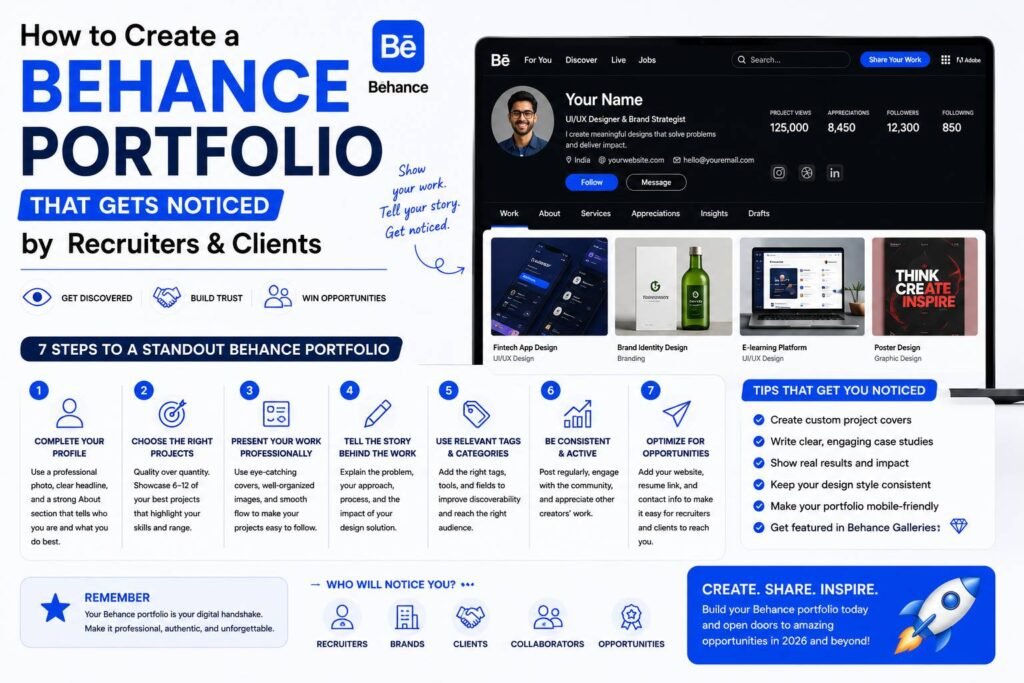
Start With a Strong Profile Foundation
Before you even think about adding projects, your profile needs to communicate who you are and what you do — instantly.
- Use a professional profile photo. A clean, well-lit headshot builds trust and makes your profile feel human and approachable.
- Write a compelling bio. Your bio should clearly state your specialty, your experience level, and what kind of work you’re available for. Keep it concise but specific. “Brand identity designer with 7 years of experience helping startups build visual systems” tells a recruiter far more than “I love design.”
- Add your location and availability. Recruiters often filter by location or remote availability. Don’t leave these fields blank.
- Link to your website and social channels. Cross-linking your platforms signals professionalism and gives potential clients multiple ways to reach you.
Your profile is your first impression. Treat it like a cover letter that works for you around the clock.
Curate, Don’t Accumulate
One of the most common mistakes creatives make on Behance is uploading everything they’ve ever made. More is not better — better is better.
Recruiters and clients typically spend only a few seconds scanning a portfolio before deciding whether to dig deeper. A tightly curated selection of your strongest, most relevant work is far more compelling than a sprawling archive of mediocre pieces.
Aim for quality over quantity:
- Feature 6 to 12 projects that genuinely represent your best work.
- Remove anything that feels dated, off-brand, or below your current skill level.
- Prioritize work that aligns with the type of projects you want to attract. If you want brand identity clients, lead with brand identity projects.
Think of your Behance portfolio as a highlight reel, not a storage drive.
Present Projects With Context and Story
This is where many portfolios fall short. Uploading beautiful images is only half the job. Recruiters and clients don’t just want to see what you made — they want to understand your thinking, your process, and the problem you solved.
Each project should tell a story. Structure your case studies with:
The Problem
Briefly describe the challenge or brief. What was the client trying to achieve? What constraints were you working within?
The Process
Show sketches, wireframes, mood boards, or early concepts. This demonstrates your methodology and reassures potential clients that you think strategically, not just aesthetically.
The Solution
Present the final deliverables in a polished, well-composed layout. Use mockups to show work in context — a logo on a business card, a website on a browser screen, a poster in an environment.
The Outcome
If you have measurable results — increased engagement, a successful product launch, a client testimonial — include them. Numbers and outcomes are incredibly persuasive.
This narrative approach is what separates a memorable portfolio from a forgettable one, and it’s a key part of understanding how to create a Behance portfolio that gets noticed by recruiters and clients who are evaluating dozens of candidates.
Optimize for Discoverability
Behance has its own internal search engine, and you should treat it with the same respect you’d give Google SEO.
- Use relevant tags. Each project allows you to add tags. Use specific, accurate descriptors like “brand identity,” “UX design,” “editorial illustration,” or “motion graphics.”
- Write descriptive project titles. Avoid vague names like “Project 3” or “Untitled.” Use titles that communicate the type of work and the industry.
- Write project descriptions. A paragraph or two describing the project, tools used, and your role helps Behance’s algorithm surface your work to the right audience.
- Categorize correctly. Selecting the right creative field and industry ensures your work appears in relevant searches.
Being discoverable isn’t luck — it’s the result of deliberate, thoughtful metadata.
Engage With the Community
Behance is a social platform, and passive participation limits your visibility. The algorithm rewards active users, and genuine community engagement builds your reputation organically.
- Appreciate and comment on other creatives’ work. Thoughtful comments attract attention back to your profile.
- Follow designers whose work you admire. Many will follow back, expanding your network.
- Post consistently. Regular uploads signal to both the algorithm and visitors that you’re active and in demand.
- Share your Behance projects on LinkedIn, Instagram, and other platforms. Drive external traffic to your portfolio to boost views and engagement metrics.
Keep It Fresh and Relevant
A portfolio that hasn’t been updated in two years sends a subtle but damaging message: this person isn’t actively working or growing. Recruiters and clients notice timestamps.
Schedule time every few months to review your portfolio. Add new work, retire older pieces, and update your bio if your services or focus have evolved. Even small updates keep your profile feeling current and alive.
Final Thoughts on Standing Out
Learning how to create a Behance portfolio that gets noticed by recruiters and clients isn’t about gaming a system — it’s about presenting yourself with clarity, intention, and professionalism. When your profile is complete, your projects tell compelling stories, your work is easy to discover, and you’re actively engaged in the community, you create the conditions for genuine opportunities to find you.
The creatives who consistently attract the best clients and opportunities aren’t necessarily the most talented in the room. They’re the ones who communicate their value most effectively. Your Behance portfolio is one of your most powerful tools for doing exactly that.
READ MORE:
- How to Use Freepik to Build a Strong Personal Brand on Social Media
- What Is Freepik? A Complete Guide for Designers and Content Creators in 2026
- How to Create a Behance Portfolio That Gets Noticed by Recruiters and Clients
Published by Branding.net.in