
What Is Personal Branding and Why Does It Matter in 2026?
Personal branding is the deliberate practice of shaping how others perceive you — professionally, digitally, and interpersonally. It’s the story you tell about who you are, what you stand for, and the unique value you bring to your field. In 2026, with AI-generated content flooding every platform and competition for attention at an all-time high, having a clear, authentic personal brand is no longer optional. It’s a career essential.
For anyone just starting out, personal branding for beginners can feel overwhelming. Where do you start? What platforms matter? How do you stand out without feeling fake? This guide answers all of those questions and gives you a practical roadmap to build a brand that genuinely reflects who you are.
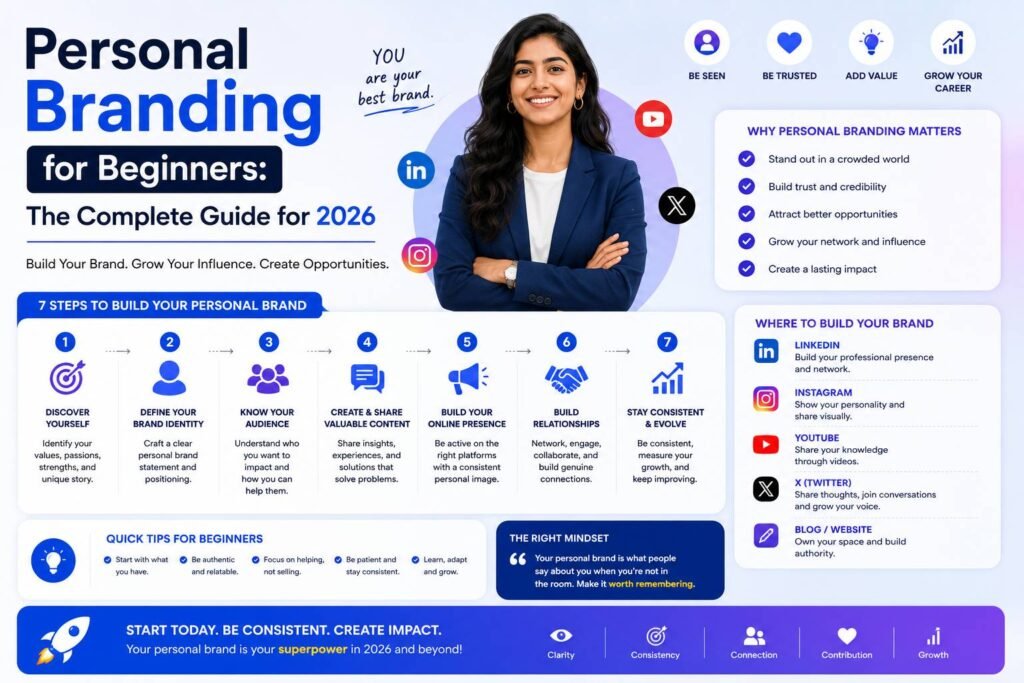
Start With Self-Discovery: Know Yourself Before You Brand Yourself
The foundation of any strong personal brand is self-awareness. Before you design a logo or write a bio, you need to get clear on a few fundamental questions:
- What are your core strengths? Think about the skills that come naturally to you and the ones others frequently compliment.
- What do you value most? Integrity, creativity, innovation, community — your values should anchor everything you put out into the world.
- Who do you want to serve? Identifying your target audience helps you craft messaging that resonates rather than falls flat.
- What makes you different? Your unique combination of experience, perspective, and personality is your competitive edge.
Spend real time here. Journal, take personality assessments, ask trusted colleagues for honest feedback. The clarity you gain at this stage will make every subsequent step significantly easier and more effective.
Define Your Niche and Position Yourself Strategically
One of the most common mistakes in personal branding for beginners is trying to appeal to everyone. The narrower your focus, the stronger your brand. Choosing a niche doesn’t limit you — it makes you memorable.
Ask yourself: What specific problem do I solve, and for whom? A marketing professional who specializes in helping sustainable fashion startups grow their social presence will attract far more targeted opportunities than someone who simply calls themselves a “marketing expert.”
Once you’ve identified your niche, craft a clear positioning statement. It doesn’t need to be complex. A simple formula works well:
“I help [specific audience] achieve [specific outcome] through [your unique approach or expertise].”
This becomes the north star for all your branding decisions.
Build Your Digital Presence Thoughtfully
In 2026, your digital footprint is often the first impression you make. That means your online presence needs to be intentional, consistent, and professional.
Choose the Right Platforms
You don’t need to be everywhere — you need to be where your audience is. Consider:
- LinkedIn for professional networking and thought leadership
- Instagram or TikTok for visual storytelling and community building
- X (formerly Twitter) for real-time conversations and industry commentary
- A personal website or blog as your home base — one platform you fully own and control
Start with one or two platforms and do them well before expanding.
Optimize Your Profiles
Every profile element should reinforce your brand:
- Use a high-quality, consistent headshot across platforms
- Write a compelling bio that communicates your niche and value clearly
- Include relevant keywords so people can find you through search
- Link to your website, portfolio, or best work
Create Content That Demonstrates Your Expertise
Content creation is the engine of personal branding. Share insights, lessons learned, industry commentary, and behind-the-scenes glimpses of your work. The goal is to provide genuine value — not to sell yourself constantly.
A simple content framework for beginners: Educate, Inspire, Engage. Rotate between posts that teach something useful, posts that share your perspective or story, and posts that invite conversation.
Network With Intention
Personal branding isn’t just about what you broadcast — it’s about the relationships you build. Networking in 2026 looks different than it did a decade ago. Online communities, virtual events, and direct outreach through social platforms have become just as powerful as in-person connections.
Here’s how to network effectively as a beginner:
- Engage genuinely with content from people you admire — leave thoughtful comments, not just emojis.
- Join industry communities on Slack, Discord, LinkedIn Groups, or Reddit.
- Reach out directly with personalized messages that reference something specific about the person’s work.
- Collaborate on content, podcasts, or events with peers in complementary niches.
Every relationship you build extends your brand’s reach and credibility.
Maintain Consistency and Authenticity Over Time
Consistency is what transforms a personal brand from a project into a reputation. That means showing up regularly with content, maintaining a consistent visual identity and tone of voice, and following through on the promises your brand makes.
Authenticity, however, is what makes consistency sustainable. Don’t perform a version of yourself that’s exhausting to maintain. The most powerful personal brands in 2026 belong to people who are genuinely themselves — flaws, opinions, and evolving ideas included.
This doesn’t mean oversharing or being unprofessional. It means letting your real perspective, humor, and humanity come through in your communication.
Measure, Reflect, and Evolve
Your personal brand should grow as you grow. Set aside time every quarter to review what’s working:
- Which content pieces generated the most engagement or led to real opportunities?
- Are you attracting the right kind of audience and opportunities?
- Has your niche, goals, or expertise shifted in any meaningful way?
Use analytics tools on each platform, but also pay attention to qualitative signals — the conversations you’re being invited into, the opportunities landing in your inbox, and the way people describe you to others.
The Long Game: Patience Pays Off
Personal branding for beginners rarely produces overnight results, and that’s perfectly normal. Building a recognizable, trusted brand takes months — sometimes years — of consistent effort. But the compound effect is real. Every piece of content you publish, every relationship you nurture, and every conversation you contribute to adds a layer to your reputation.
Start today, stay consistent, and remember: you don’t need to be the most famous person in your field to have a powerful personal brand. You just need to be the most clearly, authentically you.
READ MORE:
- How to Use Freepik to Build a Strong Personal Brand on Social Media
- What Is Freepik? A Complete Guide for Designers and Content Creators in 2026
- How to Create a Behance Portfolio That Gets Noticed by Recruiters and Clients
Published by Branding.net.in